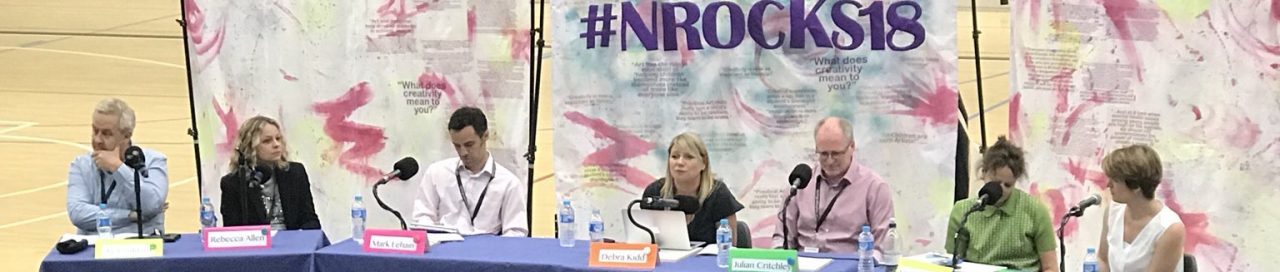
I delivered this talk at researchED London in early September 2024. After recording the session, I used ChatGPT to transform my ramblings into a written post, which still required significant editing. If only the entire process were automated—it wouldn’t have taken me four months to publish!
Artisan teaching—where teachers create their own lesson plans and resources—remains a cornerstone of English schools. At 2pm on a Thursday in September, the majority of teachers reported delivering lessons they had personally crafted. This blog post does not pass judgement on whether this is good or bad—research has little definitive to say on the matter. Instead, it explores the reasons why artisan teaching persists and considers what the future might hold for it.
Historically, technological revolutions have reshaped or eliminated artisanal roles. Machinery displaced weavers and spinners; automation revolutionised typographers and shoemakers. So, whose turn is it next?
The current AI revolution poses similar questions, though its trajectory is far from clear. We are still in its early stages, comparable to the nascent phases of the digital revolution we have all lived through. Back then, few could imagine how profoundly digital technology would transform high streets, workplaces, and even human relationships. Similarly, predicting the full impact of AI is fraught with uncertainty.
To understand how AI might reshape artisan teaching, we must first ask: Why is artisan lesson preparation such a prominent feature of education today? By exploring its origins and current place in the profession, we can better anticipate how this role might evolve—or dissolve—in the face of technological change.
Why teachers WANT to be artisans – the coder analogy
At first glance, coders and teachers seem worlds apart, with different professional skills, contexts, and even demographic profiles. However, one striking similarity unites them: an aversion to using resources created by others. Just as coders often insist on rewriting existing code from scratch, teachers frequently reject pre-prepared lesson plans and materials in favour of creating their own. This parallel provides one useful lens to understand why so many teachers embrace the role of artisan.
When a new coder joins a company, their first instinct is often to declare the existing codebase unworkable, arguing that it’s easier to start from scratch than to untangle and adapt someone else’s work. Teachers adopt a similar mindset when they join a new school, frequently opting to create their own lesson plans rather than working with existing resources. Coders may argue that understanding another person’s code is too time-consuming or that the quality isn’t good enough. Similarly, teachers might express frustration with existing lesson plans, citing inefficiency or unsuitability for their specific classroom needs.
But beneath these practical concerns lies a deeper motivation: the process of sense-making. Whether coding or lesson planning, starting from a blank page provides the satisfaction of working through ideas from the ground up. This creative process allows for greater understanding and ownership of the final product, even if it takes longer than modifying existing resources. Teachers, like coders, often find it painful to make sense of materials they didn’t create themselves, preferring the clarity and personal connection that comes with building something new.
Beyond the practicalities, artisan teaching is also about pride and enjoyment. The act of crafting bespoke materials—tailored to their students’ needs and their own teaching style—feels intrinsically rewarding, much like a coder who takes satisfaction in writing elegant, efficient code. This focus on sense-making and crafting explains why many teachers embrace artisan teaching, even when existing resources might suffice.
Why teachers WANT to be artisans – the musician analogy
Teachers share a creative kinship with musicians, particularly indie musicians, whose passion for originality mirrors the motivations behind artisan teaching. While classical musicians are generally comfortable performing pieces composed by others, indie musicians thrive on writing and performing their own music. Similarly, many teachers find deep satisfaction not just in delivering lessons but in creating the resources and plans that underpin them. For these teachers, artisan teaching is both a practical necessity and an expression of professional identity.
The contrast between classical and indie musicians illustrates the divide in teaching approaches. Classical musicians view performing others’ compositions as central to their role, much like teachers in highly centralised systems such as Singapore or France, who rely on standardised resources. In the UK, however, teachers resemble indie musicians. They embrace the challenges of crafting bespoke lesson plans, relishing the dual pleasures of creation and delivery. Just as indie musicians often write songs in their bedrooms for the sheer joy of it—despite the financial cost—teachers willingly invest time and energy in developing unique resources, even when pre-prepared materials might suffice.
The creative drive behind artisan teaching mirrors the love musicians have for their craft. Teachers take pride in crafting lessons tailored to their students and feel a sense of ownership over their work. This process fosters professional fulfilment, much like the satisfaction indie musicians derive from playing their own compositions to an audience. For many teachers, this act of creation and subsequent “performance” in the classroom is inseparable from their identity as educators.
However, not all teachers—or musicians—feel the same way. Classical musicians are “intensely relaxed” about performing others’ work, finding their identity in the interpretation rather than the creation. Likewise, some teachers are content to adapt existing resources, focusing instead on their delivery. Yet, in the UK, teacher training often embeds the expectation of artisan teaching, whether consciously or not. This cultural norm sets the UK apart from countries with centralised curricula, where the artisan role is less prevalent.
The persistence of artisan teaching raises questions about its value and future. Would centralising resources, as seen in other countries, improve or diminish teaching quality? Would such a shift drive artisan teachers away from the profession, or would it free them from an unnecessary burden? While two-thirds of UK teachers say they cannot imagine regularly using pre-prepared lesson plans without adaptation, when asked about colleagues they most admired, only a quarter mention they admire the resources and plans they create. This contradiction highlights the complex relationship between professional pride, creativity, and practicality in teaching.
Ultimately, the musician analogy sheds light on why many teachers embrace the artisan model. For them, creating lessons is more than a task; it is a defining aspect of their professional identity, much like indie musicians writing their own songs. Whether this approach remains sustainable or desirable in the face of new technologies and systemic changes is a question yet to be answered.
Why teachers (think they) NEED to be artisans
In many countries, such as Singapore and France, teachers rely on centralised, high-quality resources. In contrast, the decentralised nature of the UK education system leaves teachers feeling they have little choice but to create their own materials. This artisan approach is driven by several systemic factors: the absence of suitable textbooks, deregulation of the curriculum, and the unwaged time teachers spend lesson planning. Yet, whether self-made materials truly outperform pre-prepared resources remains an open question.
A significant challenge in the UK is the “textbook deficit.” With the rise of technology like interactive whiteboards and online projection, schools have deprioritised purchasing textbooks. This leaves many teachers without dependable resources. Only half of teachers surveyed consider textbooks their best source for curriculum planning, with many citing the poor quality, high cost, or lack of adaptability of commercial resources as barriers. In countries with centralised systems, government agencies create resources to address these challenges. In the UK, however, schools rely on commercial providers or leave resource creation to individual teachers. For headteachers, artisan teaching offers a convenient, budget-friendly solution: it shifts the costs of curriculum planning onto teachers, who often complete this work unpaid during evenings and weekends.
Despite these constraints, many teachers believe their self-created materials are superior. But is this confidence justified? Research suggests that the Dunning-Kruger effect—where individuals overestimate their expertise—may apply to curriculum planning. Teachers often rank their lesson planning as one of their greatest strengths, yet few have formal training in curriculum theory, assessment design, or cognitive psychology. Compounding this is a lack of feedback loops. Teachers rarely have the opportunity to objectively compare their self-made materials with alternatives, making it difficult to assess whether a resource they use genuinely enhance student outcomes.
The artisan approach is also fuelled by the unique challenges of the UK’s loosely specified curriculum. This flexibility allows schools to chart their own educational journeys, but it also increases the variability of what students have learned. As a result, pre-prepared resources often fail to align with students’ needs, reinforcing the perception that teachers must start from scratch.
Ultimately, the artisan model of teaching persists because of systemic shortcomings, weak feedback mechanisms, and the belief—whether justified or not—that bespoke materials are better. Teachers operate within a complex system that not only enables artisan teaching but often makes it feel necessary. However, the question remains: are these self-made lessons optimising learning outcomes, or are they simply a by-product of a system that undervalues centralised, high-quality resources? Without better feedback or stronger evidence, this question may remain unanswered.
Generative AI and the short-term future of artisan teaching
Generative AI, such as ChatGPT, is already being used by a third of teachers, primarily for lesson planning. These tools support the artisan teacher’s desire to create by offering a collaborative and iterative process for resource development. Teachers can outsource the more tedious aspects of lesson planning—such as finding key terms or structuring content—while retaining creative control over the final product. In doing so, AI complements, rather than replaces, the sense-making and creative aspects that many teachers value.
However, the approach differs across tools. Generative AI platforms like ChatGPT foster a dialogic process that mirrors the artisan teacher’s workflow. Teachers interact with the AI iteratively, asking questions, providing details about their class, and refining outputs in a way that supports their sense-making and creativity. This makes such tools highly appealing to teachers who value autonomy and enjoy the process of crafting lessons.
By contrast, tools like Oak’s AI planner focus more on meeting teachers’ practical needs. These tools allow teachers to input a short prompt, such as “I’m teaching ancient Egypt to Year 5,” and receive a customised set of materials, including lesson plans and key terms. Teachers can then refine these outputs to better align with their specific class needs. While less interactive, they aim to deliver high-quality resources that can be quickly adapted to the classroom. This addresses the challenges posed by the UK’s decentralised system, where existing commercial resources are often seen as unsuitable. However, these tools are less aligned with the artisan teacher’s desire for a slower collaborative and creative process.
In the short term, generative AI appears to support artisan teaching by enhancing the planning process. Teachers can collaborate with AI to create and refine lessons, outsourcing routine tasks while retaining their role as creators. As these tools evolve, features like integrated web search and resource adaptation are likely to improve, making them even more effective at meeting both the wants and needs of artisan teachers.
Yet, there are trade-offs. Tools like Oak’s planner may provide high-quality resources that reduce the workload, but they don’t fully align with the creativity and autonomy that define artisan teaching. While they address the “needs” of teachers, they do so at the expense of the more dialogic, iterative process many teachers enjoy. This is the heart of the conflict that teachers face: if they want to reduce workload by speeding up the planning process, they necessarily reduce the creativity through which which resources emerge.
Generative AI and longer-term threats to artisan teaching
In the longer term, generative AI poses significant challenges to the future of artisan teaching. As AI tools improve, they are likely to deliver increasingly high-quality, adaptable curriculum resources. These tools could be customised for different educational systems, year groups, and levels of prior knowledge, reducing the need for teachers to create lesson plans from scratch. This evolution might lead to direct competition for artisan teachers, as the availability of superior, pre-prepared resources grows.
One area where AI might drive change is the translation of educational content. Current limitations in adapting resources for specific curricula, year groups, or teaching conventions could be overcome by AI, enabling seamless customisation. For example, resources designed for one exam board, such as AQA, could be quickly adjusted for another, such as Edexcel, or tailored to different student contexts. Similarly, international resources, previously difficult to adapt due to language and pedagogical differences, could become more accessible, opening the door to global curriculum providers entering the UK market.
Another transformative area is assessment. While teachers often enjoy planning lessons, marking remains a substantial burden. Generative AI could revolutionise assessment by offering sophisticated tools to automate marking and provide real-time feedback. As the ease and quality of feedback provided by commercial curriculum tools continue to improve, the incentive for teachers to align their own curricula with these platforms to reduce their marking workload could become increasingly compelling.
The long-term implications for artisan teaching depend on how these shifts play out. As better resources and tools emerge, teachers may feel pressure to adopt them, especially if doing so alleviates administrative burdens and restores personal time. However, this raises a critical question: will teachers willingly cede their creative autonomy, or will the profession bifurcate between those who embrace standardisation and those who cling to the artisan model?
It’s even possible that the advent of advanced assessment tools could reshape how learning is evaluated. Lesson-by-lesson insights into student progress might highlight weaknesses in self-created resources, particularly for less experienced teachers. This feedback could disrupt the belief that artisan teaching always produces superior results, leading to a reevaluation of its value.
Conclusion
In the short term, generative AI appears to complement artisan teaching by enhancing teachers’ ability to plan and create lessons. These tools support sense-making, streamline tedious tasks, and align with the creative autonomy that many teachers cherish. However, the long-term implications are far more uncertain. As AI continues to improve, it could provide higher-quality, more adaptable resources and powerful assessment tools, potentially diminishing the need for teachers to create their own materials.
This raises profound questions about the future of teaching. Will educators embrace these tools, trading some of their creative control for convenience and reduced workloads? Or will they resist, holding onto the autonomy that has long defined artisan teaching? Perhaps the bigger question is whether a new generation of teachers, growing up in a system shaped by AI and centralised resources, will even miss what it means to be an artisan.
For now, artisan teaching is alive and well, fuelled by both practical needs and the professional identity it offers. But as technological and systemic shifts unfold, the teaching profession may face difficult choices about the balance between creativity, autonomy, and efficiency in the classroom. Only time will tell whether the artisan teacher remains central to education—or becomes a memory of a bygone era.
 Becky Allen
Thanks, Becky. We were having a conversation yesterday about how we as teacher educators see a student teacher’s planning as a window into their quality and motivation. I think your artisanal take, where artistry, ownership and sense-making become inherent to teacher identity, really helps, with or without ChatGPT! I sent the blog link to our teaching team.
Huw